
Universal Pipette Tips
Disposable pipette tips designed to fit single and multichannel pipettes from most manufacturers; offer acceptable performance compared to pipette specific tips and can be used with a variety of pipette models.
Single-use universal pipette tips are designed for compatibility with most mechanical and electronic single and multichannel pipettors.
Universal pipette tips are available in a range of types, sizes, colors, styles, and packaging configurations and may be designed for specific purposes or tasks.
- Capacity or volume based on the pipettor size
- Filters to reduce contamination and cross-contamination
- Color
- Sterility or autoclavability
- Tip style: beveled, tapered, wide bore, round, flat, or gel-loading
- Length: short or extended
- Purity: metal-free or DNase-, RNase-, ATP-, Bioburden-, PCR inhibitor-, endotoxin-, or pyrogen-free for genomic and biologic applications
- Surface treatments to reduce retention
- Packaging options to help facilitate re-stocking or eliminate waste

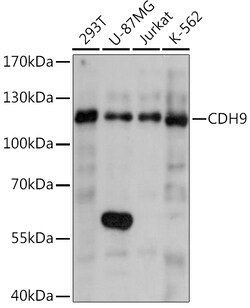
ABclonal Technology CDH9 Rabbit pAb

This gene encodes a type II classical cadherin from the cadherin superfamily, integral membrane proteins that mediate calcium-dependent cell-cell adhesion. Mature cadherin proteins are composed of a large N-terminal extracellular domain, a single membrane-spanning domain, and a small, highly conserved C-terminal cytoplasmic domain. The extracellular domain consists of 5 subdomains, each containing a cadherin motif, and appears to determine the specificity of the proteins homophilic cell adhesion activity. Type II (atypical) cadherins are defined based on their lack of a HAV cell adhesion recognition sequence specific to type I cadherins.

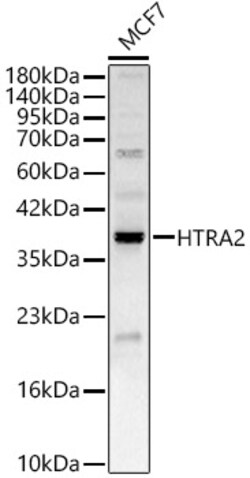
ABclonal Technology HTRA2 Rabbit pAb
This gene encodes a serine protease. The protein has been localized in the endoplasmic reticulum and interacts with an alternatively spliced form of mitogen-activated protein kinase 14. The protein has also been localized to the mitochondria with release to the cytosol following apoptotic stimulus. The protein is thought to induce apoptosis by binding the apoptosis inhibitory protein baculoviral IAP repeat-containing 4. Nuclear localization of this protein has also been observed. Alternate splicing of this gene results in multiple transcript variants encoding different isoforms.
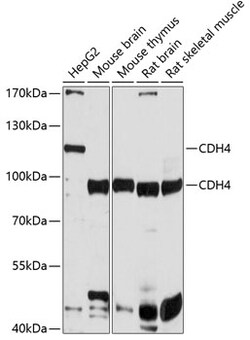
ABclonal Technology CDH4 Rabbit pAb
This gene is a classical cadherin from the cadherin superfamily. The encoded protein is a calcium-dependent cell-cell adhesion glycoprotein comprised of five extracellular cadherin repeats, a transmembrane region and a highly conserved cytoplasmic tail. Based on studies in chicken and mouse, this cadherin is thought to play an important role during brain segmentation and neuronal outgrowth. In addition, a role in kidney and muscle development is indicated. Of particular interest are studies showing stable cis-heterodimers of cadherins 2 and 4 in cotransfected cell lines. Previously thought to interact in an exclusively homophilic manner, this is the first evidence of cadherin heterodimerization. Three transcript variants encoding different isoforms have been found for this gene.

ABclonal Technology TJP2 Rabbit pAb
This gene encodes a zonula occluden that is a member of the membrane-associated guanylate kinase homolog family. The encoded protein functions as a component of the tight junction barrier in epithelial and endothelial cells and is necessary for proper assembly of tight junctions. Mutations in this gene have been identified in patients with hypercholanemia, and genomic duplication of a 270 kb region including this gene causes autosomal dominant deafness-51. Alternatively spliced transcripts encoding multiple isoforms have been observed for this gene.

ABclonal Technology CACNA1E Rabbit pAb
Voltage-dependent calcium channels are multisubunit complexes consisting of alpha-1, alpha-2, beta, and delta subunits in a 1111 ratio. These channels mediate the entry of calcium ions into excitable cells, and are also involved in a variety of calcium-dependent processes, including muscle contraction, hormone or neurotransmitter release, gene expression, cell motility, cell division and cell death. This gene encodes the alpha-1E subunit of the R-type calcium channels, which belong to the high-voltage activated group that maybe involved in the modulation of firing patterns of neurons important for information processing. Alternatively spliced transcript variants encoding different isoforms have been described for this gene.

ABclonal Technology Phospho-PPP1R12A/PPP1R12B/PPP1R12C-T696 Rabbit pAb
Myosin phosphatase target subunit 1 (MBS) is a subunit of myosin phosphatase, which regulates actin-myosin interactions via Rho, a small GTPase. RhoA, in its GTP-bound form, interacts with MBS to control myosin light chain (MLC) phosphorylation, affecting smooth muscle contraction and nonmuscle cell function. Rho-kinase, activated by GTP-RhoA, phosphorylates MBS, inhibiting myosin phosphatase. Overexpression or activation of RhoA increases MBS and MLC phosphorylation. MBS plays a critical role in modulating actin-myosin interactions and is regulated by RhoA signaling. Several isoforms of this gene arise from alternative splicing.

ABclonal Technology NLRP10 Rabbit pAb
Members of the NALP protein family typically contain a NACHT domain, a NACHT-associated domain (NAD), a C-terminal leucine-rich repeat (LRR) region, and an N-terminal pyrin domain (PYD). The protein encoded by this gene belongs to the NALP protein family despite lacking the LRR region. This protein likely plays a regulatory role in the innate immune system. The protein belongs to the signal-induced multiprotein complex, the inflammasome, that activates the pro-inflammatory caspases, caspase-1 and caspase-5. Other experiments indicate that this gene acts as a multifunctional negative regulator of inflammation and apoptosis.

ABclonal Technology ELOVL5 Rabbit pAb
This gene belongs to the ELO family. It is highly expressed in the adrenal gland and testis, and encodes a multi-pass membrane protein that is localized in the endoplasmic reticulum. This protein is involved in the elongation of long-chain polyunsaturated fatty acids. Mutations in this gene have been associated with spinocerebellar ataxia-38 (SCA38). Alternatively spliced transcript variants have been found for this gene.
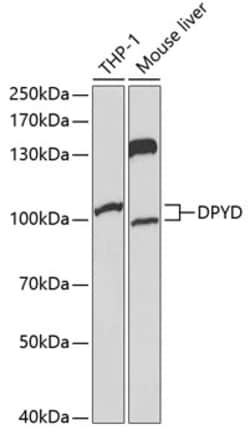
ABclonal Technology DPYD Rabbit pAb
The protein encoded by this gene is a pyrimidine catabolic enzyme and the initial and rate-limiting factor in the pathway of uracil and thymidine catabolism. Mutations in this gene result in dihydropyrimidine dehydrogenase deficiency, an error in pyrimidine metabolism associated with thymine-uraciluria and an increased risk of toxicity in cancer patients receiving 5-fluorouracil chemotherapy. Two transcript variants encoding different isoforms have been found for this gene.
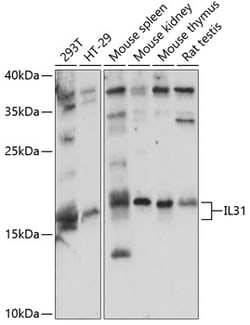
ABclonal Technology IL31 Rabbit pAb
IL31, which is made principally by activated Th2-type T cells, interacts with a heterodimeric receptor consisting of IL31RA (MIM 609510) and OSMR (MIM 601743) that is constitutively expressed on epithelial cells and keratinocytes. IL31 may be involved in the promotion of allergic skin disorders and in regulating other allergic diseases, such as asthma (Dillon et al., 2004 [PubMed 15184896]).
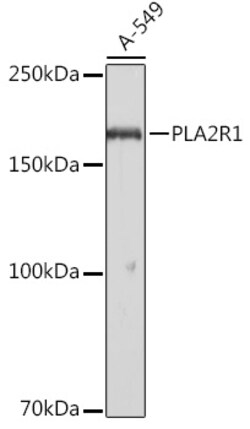
ABclonal Technology PLA2R1 Rabbit pAb
This gene represents a phospholipase A2 receptor. The encoded protein likely exists as both a transmembrane form and a soluble form. The transmembrane receptor may play a role in clearance of phospholipase A2, thereby inhibiting its action. Polymorphisms at this locus have been associated with susceptibility to idiopathic membranous nephropathy. Alternatively spliced transcript variants encoding different isoforms have been identified.

ABclonal Technology RAPGEF1 Rabbit pAb
This gene encodes a human guanine nucleotide exchange factor. It transduces signals from CRK by binding the SH3 domain of CRK, and activating several members of the Ras family of GTPases. This signaling cascade that may be involved in apoptosis, integrin-mediated signal transduction, and cell transformation. Several alternatively spliced transcript variants of this gene have been described, but the full-length nature of some variants has not been determined.
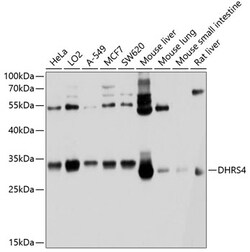
ABclonal Technology DHRS4 Rabbit pAb
Enables identical protein binding activity, oxidoreductase activity, acting on NAD(P)H, quinone or similar compound as acceptor, and oxidoreductase activity, acting on the CH-OH group of donors, NAD or NADP as acceptor. Involved in several processes, including cellular ketone metabolic process, positive regulation of reactive oxygen species metabolic process, and steroid metabolic process. Located in nucleus and peroxisomal membrane.

ABclonal Technology UPF3A Rabbit pAb
This gene encodes a protein that is part of a post-splicing multiprotein complex involved in both mRNA nuclear export and mRNA surveillance. The encoded protein is one of two functional homologs to yeast Upf3p. mRNA surveillance detects exported mRNAs with truncated open reading frames and initiates nonsense-mediated mRNA decay (NMD). When translation ends upstream from the last exon-exon junction, this triggers NMD to degrade mRNAs containing premature stop codons. This protein binds to the mRNA and remains bound after nuclear export, acting as a nucleocytoplasmic shuttling protein. It forms with Y14 a complex that binds specifically 20 nt upstream of exon-exon junctions. This gene is located on the long arm of chromosome 13. Several splice variants encoding different isoforms have been found for this gene.

ABclonal Technology TorsinA/TOR1A Rabbit mAb
The protein encoded by this gene is a member of the AAA family of adenosine triphosphatases (ATPases), is related to the Clp protease/heat shock family and is expressed prominently in the substantia nigra pars compacta. Mutations in this gene result in the autosomal dominant disorder, torsion dystonia 1.